

I was at the office, at the beginning of the year when I first really listened to Lucky Dube’s “Mr Taxman” song. This was when Nigeria’s new tax regime was being introduced and became a hot topic in public discourse across the country.
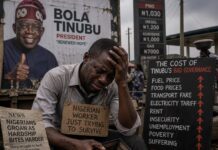
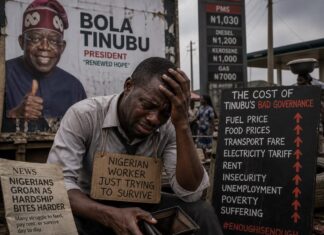
The economy was harsh, businesses were folding, people were struggling simply to survive, and into that reality the government introduced a new tax law, insisting it would not make the hardship poor working people were going through get worse. But, as it became operational and it became clear to the working masses that noticed it further burdened the already overburdened poor.
Listening to Dube’s lyrics, something in me went still. I thought to myself that this spoke eloquently to the Nigerian situation. Lucky Dube never set foot in this country, and yet, he became to me, a prophet who captured the true state of the Nigerian economy and the tax law we are still demanding answers about.
This is an essay about tax. But it is also about what happens when a government mistakes revenue collection for governance, when the machinery of the state exists not to serve the people – funding social services for the people’s welfare and fullness of development – but rather enhances its extraction of wealth from them while delivering nothing to significantly better their lives.
We can now see how the democracy of the capitalists becomes a costume of dictatorship worn to international summits while workers, poor farmers, traders and artisans scramble for cups of rice thrown from campaign buses like crumbs tossed to animals for entertainment.
This is about Nigeria. And if you are working class in this country, none of these will surprise you. What it might do, if we sit with it long enough, is force us to name what we have been circling around for decades without saying directly: that the impoverishment of the Nigerian working-class people is not an accident of bad governance. It is a strategy of the ruling class to deepen our exploitation and oppression.
Lucky Dube asks the question every Nigerian worker has swallowed at a checkpoint, at a hospital gate, at a school that produces certificates instead of thinkers, at a road that has not been fixed since the last election promise: what have you done for me lately, Mr Taxman?
We pay tax and you take it. We comply and you demand more. We protest and you send soldiers. We ask questions and you call it treason. What have you done to alleviate poverty, to boost an economy where the naira haemorrhages value while government officials build houses abroad?
What have you done to reduce unemployment in a country where graduates roam the streets with degrees and no destination?
What have you done to resuscitate a power sector so comatose that we have normalised darkness? We buy generators with money we should live on or save. We are made to pay twice for electricity; to the government on one hand and to companies that import generators on the other, not to talk of owners of petrol stations where we buy fuel at cutthroat prices, just to have electricity.
What have you done for the hospitals where doctors scramble for gloves, where patients die not from illnesses but from the criminal absence of basic equipment? What have you done for the bad roads that contribute to the deaths of scores of Nigerians every year?
These are not rhetorical questions. They are the constitutional demands of the vast majority of the citizenry – comprising working people – that have been paying for services they have never received, and the silence that answers us is the loudest indictment of the Nigerian ruling class.
And then the numbers arrive, and the numbers are where rage becomes something colder and more precise. The World Bank’s poverty line, when three dollars a day is converted into naira and calculated across a year, comes to approximately ₦1,495,080, meaning a Nigerian needs at minimum that amount annually simply to survive above extreme poverty. Nigeria’s lowest tax threshold is ₦800,000 yearly. Read that again slowly.
The government begins taxing Nigerians at an income level that falls nearly ₦700,000 short of what the World Bank defines as the bare minimum for survival. I did not have to infer this. I asked the question directly, at a training on the new tax laws for lawyers, to a man who works with the committee that reports to the president.
I told him that under World Bank poverty statistics, anyone living below three dollars a day converts to roughly one point four million naira a year, which is below the poverty line, and that Nigeria’s tax threshold begins at eight hundred thousand, meaning everyone between N800,000 and N1.4m annual is being taxed, despite living below the poverty line.
His answer was that if they did not tax that bracket, most Nigerians would not be taxable at all, and the government would be unable to raise revenue. I sat with that answer and asked what I am asking now.
Whose fault is it that so many Nigerians fall below that line in the first place? Whose fault is the harsh economy that leaves workers destitute and keeps small businesses from flourishing such that poor working people cannot rise above it?
Whose fault is the inflation eating every naira before it even reaches a working-class pocket? Whose fault is the insecurity and the violence that walks and talks like terrorism even when the government refuses to call it by its name?
You cannot manufacture poverty and then tax the poverty and call it a revenue policy. This is a case of double jeopardy. And if you need proof that this is strategy rather than incompetence, look no further than the fuel subsidy removal announced on inauguration day in 2023, without a transition plan, without cushioning for the poor, which immediately doubled transportation costs for the Nigerians least able to absorb them while the savings disappeared into government accounts without transparent redistribution.
The timing was not accidental. The absence of protection for the poor is not an oversight. It is a choice of the ruling class, ingrained into the exploitative system they represent and made in full knowledge of who would suffer most – the working people.
Lucky Dube sang that the taxman takes from the rich, takes from the poor, takes even from him, and he could not understand it. We understand it now. It is not confusion. It is intention.
Government officials who swore an oath to serve the entirety of Nigerian people have turned government into a money-making machinery where they collect salaries among the highest in the world while presiding over a country with some of the poorest and most endangered working people on earth.
The cognitive dissonance required to hold these two facts together without combusting is the daily labour of every conscious working-class person in Nigeria. Billions of naira in taxpayers’ money disappear unaccounted for every year, with no transparency, no prosecution, no consequence, and no answer delivered to the mass of Nigerians who fund every missing naira.
Nigerians pay for a police force that asks crime victims for money before agreeing to investigate. I know this not from statistics, but from standing in a police station after, at different times, reporting a sexual assault, a theft, a fraud, and being told each time by a policeman with the full confidence of a man who knows he will never be held accountable that nothing moves without payment.
That was the day I understood that justice in Nigeria is not blind. It has eyes, and they are trained on your wallet. It was also the day I questioned everything that had driven me to study law, the naive and stubborn belief that the system could be made to work for the people it was built to crush. Justice in Nigeria belongs to the highest bidder. That is not cynicism. That is the operating manual.
The oppression does not announce itself as oppression. It arrives layered, cascading, each tier pressing down on the one below it. Government oppresses citizens. Security agencies bully the masses they were supposedly established to protect.
Agberos and touts descend on motorists, traders, and anyone they can intimidate into paying for the “privilege” of existing in public spaces. Men bear down on women and children. Women, trained by the same system of domination, sometimes bear down on other women and children.
Religious leaders extract devotion, money, and silence from their congregations in the name of a God who, in every tradition I have studied, is said to take the side of the poor. The circle closes on itself and then begins again, and there is no exit visible from inside it.
And when elections approach, this same government that has spent four years taking from us arrives with cups of rice and beans, throwing them from campaign buses like a farmer scattering feed, watching poor Nigerians scramble and calling it empathy.
The deliberate impoverishment of a citizenry to manufacture dependency is not a side effect of bad governance. It is a governance principle of neocolonial capitalist rule, Naija style. Hungry people find it difficult to organise. Desperate people accept crumbs. Tired people do not march. This government understands that better than it understands anything in the constitution it swore to uphold.
There was a video that went around of the president telling Nigerians to manage their hunger, delivered with the calm certainty of a man who believes he is working on the economy while the people funding his salary are told to endure theirs. That single sentence is the entire hypocrisy of Nigerian governance compressed into four words.
You are told to manage your hunger while the government spends lavishly, and its officials travel abroad on a schedule that outpaces any visible progress in the economy. And they call this leadership!
Nigerian public life has become an election game rather than a nation being built, and government office has become an entitlement rather than a duty, a seat you occupy because you got there, not because you serve the people in it.
The poor masses in Nigeria would resist this more forcefully if “tribalism” were not doing exactly what it was designed to do, which is keep us divided against our own class interests. It is my “tribesman”, so it does not matter what he does. It is my religious brother, so we protect our own regardless of incompetence or wickedness.
Capitalism thrives inside that division, because the rich eat well while there is no respect for the civil, social and economic rights of the poor masses, of women and children, of people with disabilities, of workers, of anyone outside the circles of the ruling elites.
Even the security agencies that we are told are meant to protect those rights instead function as the weapons of the political class, playing the same role they played for the colonial masters who used force to crush protest and dissent.
The baton has simply changed hands, from colonial leadership to local Nigerian capitalist leadership, and it carries the same entitlement, the same corruption, the same class dictatorship, the same suppression of freedom dressed in a new flag.
Lucky Dube called the taxman a fat man who always takes and never gives. In Nigeria, the fat man sits in Abuja, flies first class or private jets on a budget the approved in our name, builds roads that exist only in appropriation documents, and tells the world that the country is on a path to development while its working people ration fuel, beg for electricity, and bury their children in hospitals that have run out of oxygen.
So I return to the question Dube asked from a stage in apartheid South Africa, a question so durable it has survived his death and crossed a continent to land here, in 2026, in a country that calls itself the giant of Africa while its people live below the floor of human dignity: what have you done for me lately, Mr Taxman?
And I add the question he did not ask but that every Nigerian worker, poor farmer, artisan small-scale trader, etc., deserves to ask aloud in public without fear of what comes after: is it greed, or is it wickedness, is it the particular incompetence of people who have confused access to power with the capacity to wield it for something other than themselves, or is it the way the system they represent works?
If the answer were yes for only the first of those questions it would mean the system can be reformed. But, a critical examination of everything shows that the answer is yes to each and every one of the questions.
This means we have been paying, with our money and our silence and our lives, for something that was never designed to save us.
Only we can save ourselves from the taxman and the exploitative whip of the thieving ruling class. And we can do that only by pulling out the problem from its roots: system change through revolutionary struggle.
By Jenifatu YAKUBU