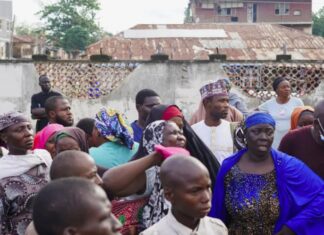


Nigeria is abundantly endowed with vast agricultural land, enormous mineral resources, and a youthful population. Yet, paradoxically, millions of Nigerians experience hunger every day. Despite constitutional commitments of the state to the welfare of citizens and repeated government promises of poverty reduction, hunger has become a defining feature of daily life for the vast majority of the population.
Ironically, it appears that hunger has become a “fundamental right” for the poor working people, not because it is guaranteed by law, but because it has become an unavoidable reality for our class.
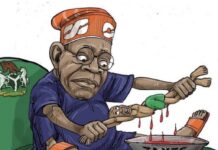
The shameless response of President Bola Tinubu has been that “hunger was in Nigeria before he was born.” In a nation where multidimensional poverty continues to rise, access to adequate food has become a privilege rather than a basic human right.
The structural nature of hunger and multidimensional poverty
Understanding multidimensional poverty
Poverty extends beyond low income. The United Nations Development Program (UNDP) defines multidimensional poverty as deprivation in health, education, living standards, employment, nutrition, and access to essential services. This is a perfect definition of what life has become for working-class families in the country.
Nigeria consistently ranks among countries with the highest number of multidimensionally poor people. Millions lack access to quality healthcare, education, clean water, decent housing, electricity, and productive employment.
This broader understanding explains why hunger persists even among those who earn some otherwise reasonable extent of income. Rising inflation, unemployment, insecurity, poor infrastructure, and declining purchasing power have combined to make nutritious food unaffordable for many working-class households.
Hunger in Nigeria reflects deep structural problems rather than individual failure of the worker as the rich want to make us think. Inflation has dramatically increased the prices of staple foods such as rice, maize, beans, yam, and garri. Workers’ wages have failed to keep pace with the cost of living, while millions in the informal economy have no stable income or social protection.
Insecurity across farming communities has displaced farmers, reduced agricultural production, and disrupted food supply chains. Banditry and terrorism have forced many rural residents to abandon their farms, reducing food availability and increasing prices.
Government policies have also contributed to food insecurity. The removal of fuel subsidies, currency depreciation, and rising transportation costs have significantly increased the cost of producing and distributing food. Consequently, hunger has become institutionalized through economic policies that disproportionately burden the poor working people.
Constitutional “guarantees” are not enough
Chapter II of the Constitution of the Federal Republic of Nigeria provides that the state shall direct its policy toward ensuring the welfare of all citizens and providing adequate food, suitable employment, and reasonable living conditions. However, these provisions are mere cosmetics and are generally non-justiciable, meaning citizens cannot compel the government in a Nigerian court to enforce them, despite a ruling otherwise by the ECOWAS court.
Internationally, Nigeria has ratified treaties recognizing the right to adequate food, including the International Covenant on Economic, Social, and Cultural Rights (ICESCR). Nevertheless, implementation remains weak, and millions continue to experience food deprivation.
Thus, while the law speaks of welfare and dignity, everyday reality tells a different story where hunger has become normalized.
From a political economy perspective, hunger is not merely the absence of food but the outcome of unequal distribution of resources and opportunities. Marxist argue that poverty and hunger are products of exploitative economic structures that prioritize capital accumulation over human welfare.
Nigeria’s wealth is concentrated in the hands of a small elite comprising capitalists and landlords, while the majority comprising workers, poor farmers, artisans, etc., struggle to meet basic needs.
A grave danger to the current and future generations
Corruption, Kleptocracy, illicit financial flows, tax evasion, and poor governance divert resources that could finance education, healthcare, agriculture, and social protection. Consequently, hunger is a political issue and not merely an agricultural one. It is one of the pillars of the subjugation of the working masses. It is weaponised as a political tool with devastating consequences for society today and the future.
Malnutrition affects children’s cognitive development, reduces educational attainment, weakens labor productivity, increases the disease burden, and contributes to higher mortality rates. Hunger also fuels crime, insecurity, social unrest, migration, and political instability.
For workers, hunger weakens bargaining power and forces the acceptance of exploitative wages and poor working conditions. It undermines human dignity and limits citizens’ ability to participate meaningfully in democratic governance, leading to the normalisation of vote buying.
Towards Food Justice
Addressing hunger requires more than emergency food distribution. We must pursue structural reforms that guarantee food security through investment in agriculture, rural infrastructure, irrigation, storage facilities, agricultural extension services, and access to affordable credit for farmers.
The government must be made to strengthen social protection programs, implement living wages, expand school feeding programs, and establish effective food reserve systems. State policies must also be made to prioritise ob creation, industrial development, and equitable economic growth.
Equally important is the fight against corruption and illicit financial flows, ensuring that public resources are invested in improving the people’s welfare rather than enriching a privileged minority.
Hunger as a “Fundamental Right” in Nigeria remains an odd and powerful paradox exposing the contradiction between constitutional aspirations and lived realities. Hunger is not a legal right but has become a guaranteed experience for the millions of working people trapped in multidimensional poverty. With the abundance of human and natural resources in Nigeria we should have no business with widespread food insecurity.
The true measure of national development lies not in GDP figures or oil revenues but in whether the people can eat nutritious meals, access decent work, and live with dignity. Until the economic and governance structures in Nigeria are transformed to place human welfare at the center of development, hunger will remain one of the country’s most enduring symbols of inequality and injustice. To achieve this, we must organise, unite and fight to overthrow the kleptoocratic rule of the degenerate bosses who exploit and rule us with a revolution of the working people.
By Ralph GABIN