

The Workers’ Rights Campaign, a network of working-class activists, has called for the deepening of solidarity among working people to build popular power in confronting the forces behind the worsening economic hardship and violations of labour rights that we face.
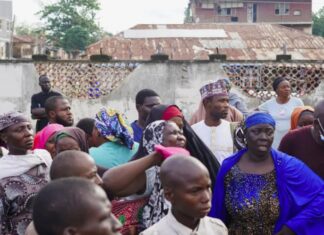
This call echoed through interventions made by comrades at at the symposium organised by the WRC on Thursday 6 August at the Workers’ Rights Centre, Iyana Ipaja, Lagos, as they gathered to discuss the current situation and measures for addressing the challenges confronting workers.
The symposium, themed “How Can We Stop the Worsening Hardship We Are Facing as Working People?”, formed part of the WRC’s broader effort to organise workers and strengthen advocacy for labour and trade union rights.
It brought together members of the SWL, representatives of trade unions, informal workers’ organisations, civil society groups and African Action Congress House of Representatives candidates for federal constituencies in Lagos and Oyo states.
The lead speakers were: Lai Brown, the General Secretary of the Automobile Boatyard; Kelvin Ayemhenre, Chairperson of the IndustriALL Youth Committee, Sub-Saharan Africa; Juwon Sanyaolu, National Coordinator of Take It Back; Adeyinka Olamide, Lagos State Secretary of Take It Back; and Baba Aye, Editor of Socialist Worker and Secretary of the WRC.
Sanyaolu noted that economic hardship in Nigeria has always been there, because the capitalist system is designed to make life hard for working people who are exploited by the bosses. But the current dimension is very devastating, reflecting the worsening reality of capitalism which now has no redeeming prospect for social progress.
He stressed that the only way to defeat our oppressors and stop the hardship is to organise without ceasing, to build popular power. Those who benefit from the system, he said, will not be willing to change it.
Ayemhenre called for unions to broaden the scope of their demands beyond minimum wage to include social protection measures like social housing, and price control. He also emphasised that trade unions demands should not be limited to bread and butter issues. In each sector, the trade unions should engage to shape legislation and policy to the benefit of working people.
Working-class activists, he argued, should also galvanise the people politically to win power. We will never liberate ourselves if we don’t wield power ourselves for ourselves.
Azeez stressed the need for organisation and unity within the ranks of our class. Being a leading community and youth organiser in the heat of demolition of working-class communities in Oworoshoki and other parts of Lagos, he noted the brutality of the state and the shrinking of the civic space.
The state, he said, have also taken to collaboration with thugs in the ruling class efforts to suppress popular power. He and other TIB comrades who had joined the teachers’ union in a demonstration at Ibadan to protest the wave of kidnapping of school pupils and teachers were attacked by such thugs. A similar situation took place on 5 August during the #RevolutionNow demonstration in Lagos.
Brown reiterated the need for ramping up organising and consolidating our unity as working-class people. These, he said, are necessary for our fightback against the bosses and their anti-poor people policies.
He further expressed the view that trade unions have not been as strong as they could be in organising workers. The trade union density is quite low leaving millions of workers without union protection. He however added that organising our class cannot be left to the trade unions.
Socialist working class organisations like the WRC have a duty to work more asdidously within the working class, standing by workers in their day-to-day struggles, not as substitutes to the union’s but as allies in pushing forward the interests of working-class people.
Bàbá Ayé stated that the current hardship being faced by working-class people demonstrates the failure of capitalism to ensure any further social progress on one hand, and the failure of the labour movement’s leadership in the struggle against the bosses.
The capitalist system, he said, works primarily in the interest of the class of the bosses who exploit us. The secret of their wealth lies in our poverty and the linkage is the exploitation of our labour power and the natural resources of our land.
At an earlier period in history which included he first few decades of independence, working-class resistance had been able to leave the ruling class with no choice but to make concessions to our class. Free education, significant funding of healthcare and relative ease of employment were the norm.
But since the late 1970s/80s till date, working-class people have faced a barrage of attacks. Privatisation, deregulation (especially of fuel pump pricing) decline in real wages, and retrenchment of workers have been the norm. The structural adjustment programme laid the policy basis for the neoliberal capitalism of the past four decades.
The situation has gotten far worse since the global financial crisis. And President Bola Tinubu has been the most faithful disciple of this market undamentalist playbook of imperialism. The World Bank and IMF have been the institutional arrow head of imperialism in Nigeria. But the local capitalists are no less culpable.
We must not only be anti-imperialist. We must be clearly anti-capitalist. But these cannot simply be about slogans. We must organise and carry out political education with clear language in our workplaces, communities, student and trade unions, explaining the root cause of the hardship we are facing and the need to fight not just for immediate concessions like social protection, but indeed to overturn the exploitative capitalist system at the root of our suffering.
Several comrades made incisive interventions.
Ismael Ogunsola, án AAC House of Reps candidate highlighted the need for social protection advocacy to include informal economy workers.
Ekene Ojieh, an AAC House of Reps candidate as well stressed the need for renewed efforts at rebuilding revolutionary left ideas and organisation in the students movement and the need to forge strong ties between workers and youths. This, she said, would lay a solid basis for the battles that lie ahead.
She also underscored the importance of revolutionary literature and the need for revolutionary activists to study. Theory enlighten our practice. And practice reinforces our theory.
Ese Anegbe, a member of SWL called for more intensive work at the grassroots: in our communities and workplaces. We must combat the divisive ideas of which the ruling class use to diffuse mass anger against them while they impoverish us.
She said we should make it clearer to working people, women and youth that the bosses don’t see any religious, ethnic or regional differences among themselves when sharing the money up there. But they use these identities to try to fragment our ranks.
Ayo da Reporter reaffirmed the need for renewed political work within the students movement. He noted how reactionary ideas are taking the kind of foothold they could not find in earlier generations within the campuses today.
Ayoola, a member of the SWL Editorial Board observed that some of those who were part of the #EndSARS Rebellion are now on the side of the oppressors. This is however not very surprising. Moments of revolt throw up strange bed fellows.
Revolutionaries are joined by reformists within the mass in revolt. While we need to have a united front against reaction in such moments, we must also carry out ideological struggle to avoid reformists derailing such popular struggles.
The meeting ended with an upbeat spirit to bringing together working-class activists, trade union members and other workers committed to defending labour rights in discussions such as this and standing with them in solidarity and struggle.
The WRC is committed to opposing the casualisation of employment, privatisation, workplace violence and violations of trade union rights, while promoting gender equality, the rights of young workers and safe and healthy workplaces.
It will also advocate for decent work and the fundamental principles and rights at work.WRC intends to pursue its objectives through public awareness campaigns, educational activities, petitions, demonstrations and engagement with government and legislative processes on issues affecting workers.
The WRC will also provide legal support to workers whose rights had been violated, as much as it can, and work with trade unions and workers’ organisations to build broader solidarity around labour struggles.
This first symposium of the Campaign comes as the WRC seeks to establish itself as a support platform for organising workers. All workers, including those that are not members of trade unions, who are committed to the defence of workers’ rights are welcome to join us in advocacy, education and struggle for working people to win better lives.Let us Unité and Fight for Workers Rights!
By Ayoola BABALOLA & Muda OGIDAN