
Introduction: the weight we carry
“Revolutions are brought about by (wo)men, by (wo)men who think as (wo)men of action and act as (wo)men of thought.” – Kwame Nkrumah
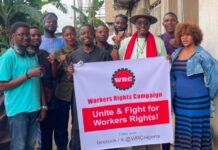
Comrades, leaders of the labour and student movements, fellow working-class fighters, and all oppressed people gathered here today at the Workers’ Rights Centre, I salute you all.
We gather here not in comfort, but in the midst of a crisis. We gather at a time when to be a worker, a poor artisan, trader or farmer in Nigeria, is to endure a daily, deliberate assault on our dignity, our livelihood, and our very right to exist.
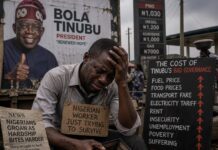
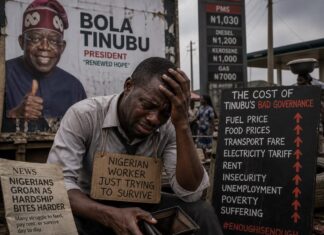
The flyer for this symposium lays bare the stark, painful reality of our existence: 140 million human beings—our mothers, our brothers, the youth and other marginalised strata of the society —pushed into the crushing depths of poverty. A poverty rate that rose relentlessly from 40% in 2019 to over 63% today.
We live in a society where having a job no longer guarantees survival; where wages evaporate within days in the furnace of inflation, and where small traders, artisans, and informal workers watch their hard-earned livelihood dissolve into thin air.
They tell us to “tighten our belts” while the ruling elite expand theirs. They tell us there is no money for public schools, no money for public hospitals, no money for decent wages—yet the wealth concentrated in the hands of less than 1% of this country could lift scores of millions out of misery and end poverty in the country.
This is not an accident of history. It is a calculated economic architecture designed to enrich a few by impoverishing the rest. And the only way we can change this is to understand the forces at work behind our impoverishment and on the basis of this, for us to unite and fight to smash their exploitative system and overthrow their oppressive rule with our revolutionary struggle.
The Voice of the Dispossessed: Demolition, Displacement, and Violence
“Always bear in mind that the people are not fighting for ideas, for the things in anyone’s head. They are fighting to win material benefits, to live better and in peace, to see their lives go forward, to guarantee the future of their children.” – Amilcar Cabral
When we speak of economic violence, it is not just abstract statistics on a piece of paper. It is real, physical, and brutal.
I stand before you today not just as an organizer, but as someone who carries the voice and the scars of the displaced—those who have watched state-backed bulldozers reduce their lives, their shelters, and their livelihoods to dust.
Across our cities, under the guise of “urban renewal” or “development,” the unemployed and working poor are systematically erased. A mother wakes up in the morning, works tirelessly to secure a small shelter for herself and her children, only to have heavy machinery tear down her roof before sunset without compensation, without respect, and without an alternative.
Artisans have had their workshops destroyed; market women have lost their stalls to bulldozers; families are scattered to the wind. Why? Because in the eyes of the ruling class, the poor in our cities are an eyesore to be cleared, not citizens to be protected. They displace us from the land, displace us from the economy, and then criminalise our poverty when we try to survive on the margins.
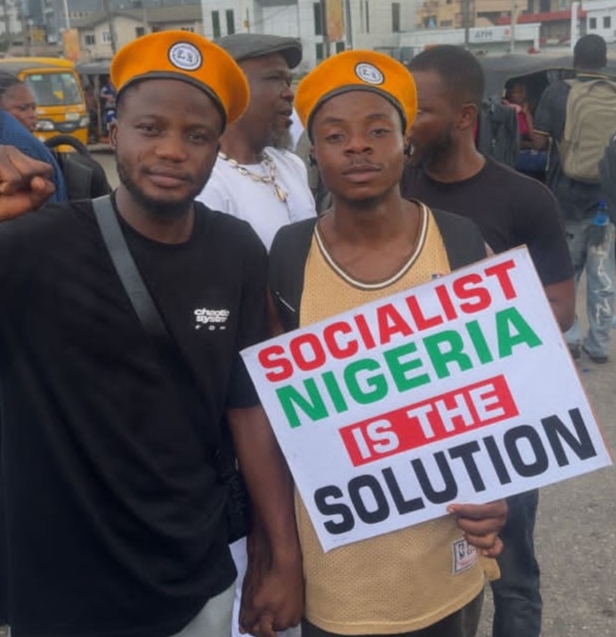
And when the oppressed stand up to say “No more!”—when we gather at our spaces of struggle, as we saw during the events around the August 5 #RevolutionNow actions—what do we face? We face state repression, state violence, and the brutal crackdown of those who fear the unity of the working class.
The attack on comrades during the August 5 Festival of the Oppressed was a direct attempt to terrorize the movement, to break our spirit, and to send a message that resistance carries a blood cost. They thought that by attacking our bodies, tearing down our structures, and brutalising our ranks, they could silence our collective voice.
The Bitter Truth: The Danger of Internal Division
“The ultimate structural measure of revolutionary victory is unity, solidarity, and the total refusal to devour our own in the face of the enemy” – Che Guevara
But comrades, as we dissect the cruelty of the state and the ruling class, we must also be honest with ourselves. We must look inward with uncompromising clarity.
The enemy outside our gates is powerful, but our greatest vulnerability lies within. When hardship deepens, when state pressure mounts, the worst thing that can happen to an oppressed class is to turn its anger against itself.
We have witnessed instances where comrades attack comrades, not on the bases of ideological or strategic differences, and without a sense of mutual respect. Ego, factional desperation and sectarianism have often led to physical, verbal, or structural assaults within our own movement spaces.
Let me state this unequivocally: Any violence, sabotage, or hostility directed at fellow comrades within the movement is a victory for the oppressor. There will always be disagreement from time to time once we think critically. But that does not mean that we should take on each other with the kind of bitterness we often see on the left.
When we fight each other like that, the ruling class does not need to send police or bulldozers; we would simply be doing their job for them. When a displaced family sees activists turning on one another instead of uniting to fight in a struggle to stop the forces that demolished the family’s shelter, they lose faith in the struggle. When a worker in the informal economy whose shop was demolished sees internal acrimony instead of solidarity, they ask: “Who will fight for us?”
We must make sure that our movement spaces remain sanctuaries of solidarity, not battlegrounds of sectarian warfare. We can disagree on tactics, we can debate strategy. In fact we need to do so for the ideological and political development of our movement. But, we must maintain unbreakable class unity against our true oppressors.
Towards Tackling the Economic Crisis
So, where do we go from here? How do we stop this worsening hardship? How do we rebuild our movement as working people and build power from the rubble of demolitions and the trauma of state violence?
How do we move from generalised lamentation to sustained, organised and consciously enacted action? I propose four critical steps that we can take in this direction:
Uniting the Formal and Informal Working Class
We must bridge the divide between trade unions in the formal sector and the organisations of working people in the massive informal economy. The workers in factories, the transport workers, the street vendors, the market women, and the displaced artisans must stand in a single, formidable coalition. An injury to a trader in Iyana Ipaja market must be treated as an injury to a unionized worker at the airport or on the factory floor.
Resisting State-Sponsored Displacements and Demolitions
We must build Community Defense Networks. No longer should a bulldozer show up in a working-class community without meeting organised, legal, media, and physical resistance from the broader movement. We must demand an immediate halt to forced evictions, full compensation for victims, and social housing programs funded by taxing the super-rich.
Rejecting Anti-People Economic Policies
We must wage a relentless campaign against IMF- and World Bank-driven policies that slash public funding for education, healthcare, and infrastructure while inflating taxes on the poor. Wealth must be redistributed. The resources of this nation must serve the 140 million working people living in hardship, not the political elite.
Enforcing Internal Discipline and Revolutionary Accountability
We must institute clear structures of accountability within our movements to eliminate violence, betrayal, and factional attacks among comrades. We must foster a culture of political education, mutual respect, and collective protection.
Conclusion: We Will Rise from the Rubble
Comrades, the ruling class wants us to be hopeless. They tear down our houses to make us feel small. They raise the cost of living to keep us too tired to fight back. They attack our gatherings to make us afraid.
But they forget one fundamental truth of human history: You can demolish a building, but you cannot demolish the spirit of an awakened people.
The dust from the rubble of our displaced homes has not blinded us; it has cleared our eyes to see the true nature of this regime. The attacks on 5 August did not break us; they sharpened our resolve.
Let this symposium be a turning point where we pledge to defend one another, to organise every street, every workplace, every campus, and every community. Let us turn our shared pain into shared power.
Unite, organize, and fight!
Thank you, comrades! Long live the working class!
By Olamide Abdulazeez ADEYINKA
Being a paper prepared for the 6 August Workers’ Rights Campaign symposium held at the Workers’ Rights Centre, Lagos