
Agencies of the federal government have arrested Nasiru El-Rufai, a former governor of Kaduna state, several times over the last few months, and is being detained over allegations of corruption and breach of state security. These have to do mainly with accusations of grand embezzlement during his 2015-2023 tenure as governor.
The Economic and Financial Crimes Commission (EFCC) and the Independent Corrupt Practices and Other Related Offences Commission (ICPC) have focused on allegations of El-Rufai looting the treasury of Kaduna State. This includes his reported embezzlement of N423bn, according to the Kaduna State House of Assembly, which had earlier probed the finances of the state under his watch after Governor Uba Sani took over from him.
Other issues which the State Security Service (SSS) is taking him up on include the opening of a formal investigation of El-Rufai and his sons on the disappearance of Dadiyata, the social media critic, and his phone tapping the National Security Adviser, Nuhu Ribadu.
There are some people in several quarters who want to reduce the current situation to the persecution of El-Rufai by the ruling All Progressives Congress (APC) and the administration of President Bola Tinubu for his switching over to the African Democratic Congress (ADC).
El-Rufai is a founding member of the APC. He also supported Bola Tinubu to come to power against the machinations of other influential factions in the party. However, they fell apart after he was denied a ministerial seat. And the ADC he has now joined, which brings together a long list of yesterday’s men in the ruling class, has ascribed itself the role of “coalition” of capitalist opposition for the 2027 elections.
This points to the need for a critical assessment of his legacy as the “accidental public servant” that he once called himself, particularly for the period he was governor.
Mass sack of workers
The poor working people could not wait for him to leave power in Kaduna state. Up to 60,000 public sector workers were sacked during his eight-year reign. These included workers in the local government councils, where prayer sessions were organised to curse him after more than 4,000 of their colleagues were laid off. 21,000 teachers were also dismissed. And 17,000 primary health care workers lost their jobs as well. All this was part of El-Rufai’s wage-bill-reduction neoliberal campaign.
The impact of these on hundreds of thousands of family members and dependants of the sacked workers cannot be overemphasised. It became difficult for them to feed and take care of themselves. Many people died because of this. So many children dropped out of school because of the anti-poor people policies and laws of El-Rufai.
Normalisation of repression
El-Rufai never tolerated criticism from any quarter. He was ever ready to kill a fly of criticism with the sledgehammer of repression, when he was in power.
approach to ethnic divisions in Kaduna State was equally disgraceful. He did not exhibit the slightest sense of respect for the minority ethnic groups in Southern Kaduna. All he knew how to do was to wield the big stick of state repression to quell their legitimate demands.
Thousands of people were killed in inter-communal clashes in Southern Kaduna. And what did he do about it? Instead of initiating dialogue to address these inter-ethnic conflicts, he arrested some of the very people who spoke about their being oppressed.
Among those he arrested, at several instances most times, were nine community leaders in Southern Kaduna: journalist Jacob Onjewu Dickson in 2016, university lecturer Dr John Danfulani in 2016, Malam Nasiru Jagaba, Luka Binniyat of the Epoch Times in 2021, musician Audu Maikori in 2017, activist Stephen Kefas in 2019, and Segun Onibiyo.
These are just a few of the individuals arrested during his tenure simply because they dared to speak truth to power, or even just report the truth to the populace, including with posts on social media that El-Rufai found offensive.
The most controversial case remains that of Abubakar Idris, a university lecturer between known online as Dadiyata. He sharply criticised El-Rufai and several other people in power in northern Nigeria. That was until 2 August 2019, when he was abducted from his home in Kaduna by masked gunmen.
He has disappeared since then. But some cryptic posts by El-Rufai’s sons on social media hint at the El-Rufai’s having an idea of, or at least being in alignment with Dadiyata’s disappearance. One of such posts by Bashir El-Rufai a few months after the disappearance concluded with “Dangerous lies in public spaces have consequences.”
Hunger, demolition, and massacre
During the COVID-19 period, El-Rufai denied basic human rights to many indigent residents of Kaduna State; some people reportedly died as a result of hunger, depression, and anxiety that stemmed from this.
He also demolished the houses of poor people in Malali and other working-class neighbourhoods in the state. Some capitalists who opposed him also had their houses demolished without hesitation. His tyranny knew no bounds, except for that beyond his power to summon. While he was the governor of Kaduna, he behaved as if he were the creator of the people themselves, never imagining that these present days would eventually come in his life.
He also played a significant role in the 2015 Zaria massacre, where General Tukur Yusuf Buratai as Chief of Army Staff (COAS) led the killing of over 300 Shi’ite Moslems, allegedly with the backing of Saudi Arabia. The Kaduna Leadership and Accountability Assembly (KLAA) which also noted that El-Rufai left Kaduna “scarred by intimidation, hardship, financial mismanagement, and religious bigotry” has pointed out that he was responsible for the clash and is not fit for public office.
He also demolished buildings belonging to the Islamic Movement of Nigeria (IMN) across the state and even demolished schools attended by orphaned children whose parents had been killed by government forces during their struggles for social justice, including demands for the release of their leader, Sheikh Ibrahim Zakzaky.
Protesters against his actions were killed by the police in Kaduna State with impunity, and hundreds of IMN members were arrested. It was stated that 347 people were buried in a mass grave with the help of the Nigerian Army, as mentioned by the Secretary to the Kaduna State Government during El-Rufai’s tenure before the Judicial Committee of Inquiry.
Conniving schemer; fair-weather politician
The current issues of political manoeuvres surrounding El-Rufai are not new; he has always been involved in political conflicts with various politicians he believed he could outmanoeuvre.
In 2007, El-Rufai began fighting Obasanjo after completing his service as the Federal Capital (FCT) Minister. Why? Because his associate, former Aviation Minister Osita Chidoka recommended him as a successor, but Obasanjo rejected the idea.
In 2008, he clashed with the late Umaru Musa Yar’Adua because, while he had been schemed out of becoming president, the mantle had been handed over to Yar’Adua, and he saw no opportunity for himself within that administration.
He turned against Jonathan after pledging his support on May 11, 2010, simply because Jonathan refused to make him his running mate for the 2011 presidential election and instead chose Namadi Sambo.
In 2015, El-Rufai supported General Muhammadu Buhari’s campaign, despite previously calling him out as being too old to run, since the party assured him the Kaduna State governorship ticket. He supported Tinubu in the 2023 presidential election. But the moment he was screened out as a minister, he began fighting Tinubu as well.
Always sly like a fox, he dragged the former Kano State governor and also former APC National Chairman, Abdullahi Ganduje into the controversy surrounding the Dadiyata case. This was because he could not escape the mounting questions and instead escalated the controversy to the highest level.
Conclusion
It is important for working-class people to understand that the ongoing fight between El-Rufai and the sections of the ruling class aligned today with Bola Tinubu is a fight driven purely by personal political interests and has nothing to do with a commitment to democracy on El-Rufai’s part, any more than that of the presidency.
Once his interests are secured, he goes silent. These battles are not for the masses; we must not be deceived. We must not forget everything El-Rufai did to the mass of the people in Kaduna State, and in the FCT when he served as minister there, or as a leading member of the ruling class when he was in the People’s Democratic Party (PDP) as well as in the APC.
This is also not the first time that El-Rufai has been charged with corruption. In 2008, the EFCC declared him wanted for “abuse of office and misappropriation of public funds to the tune of ₦32 billion” when he served as FCT Minister. But he found his way to make peace with those who were then in power from within the same ruling class to which he belongs. They always do so.
How many of all these big-time capitalist politicians charged with corruption involving billions of naira do we ever see convicted and sent to jail? They claim nobody is above the law, yet the ruling class drafts the laws that govern us and then manipulates it for their own benefit.
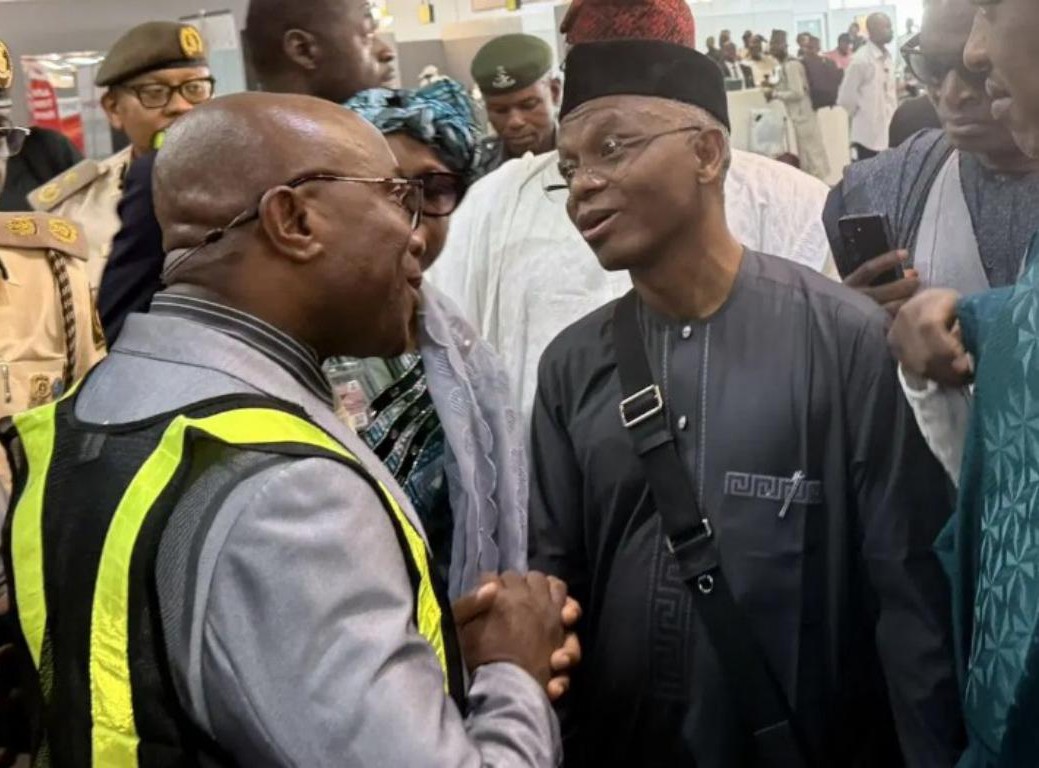
It is instructive for example that El-Rufai was allowed to go from detention for the burial of his mother recently. This is a privilege that is never granted to poor criminals. As if that were not enough, several prominent politicians attended the funeral, including Nuhu Ribadu, the National Security Adviser who is also prosecuting him.
We do not support Nuhu Ribadu/APC or El-Rufai/ADC. They are all birds of a feather. They are all part of the ruling class who have made life terrible for us, the poor working people, and continue to make it worse.
We should have no illusions that any of them or their parties have our concerns in mind. But, while we insist on due process and open trial of El-Rufai, we must not lose sight of the fact that he is and has always been a conniving, tyrannical and self-serving corrupt politician, who has cost hundreds of thousands, if not millions of people their wellbeing and in some instances, their lives. Do not cry for El-Rufai. He has brought so much tears to the eyes of too many working-class people.
by Adam Khalid MUHAMMAD (Mr Kakaki)