
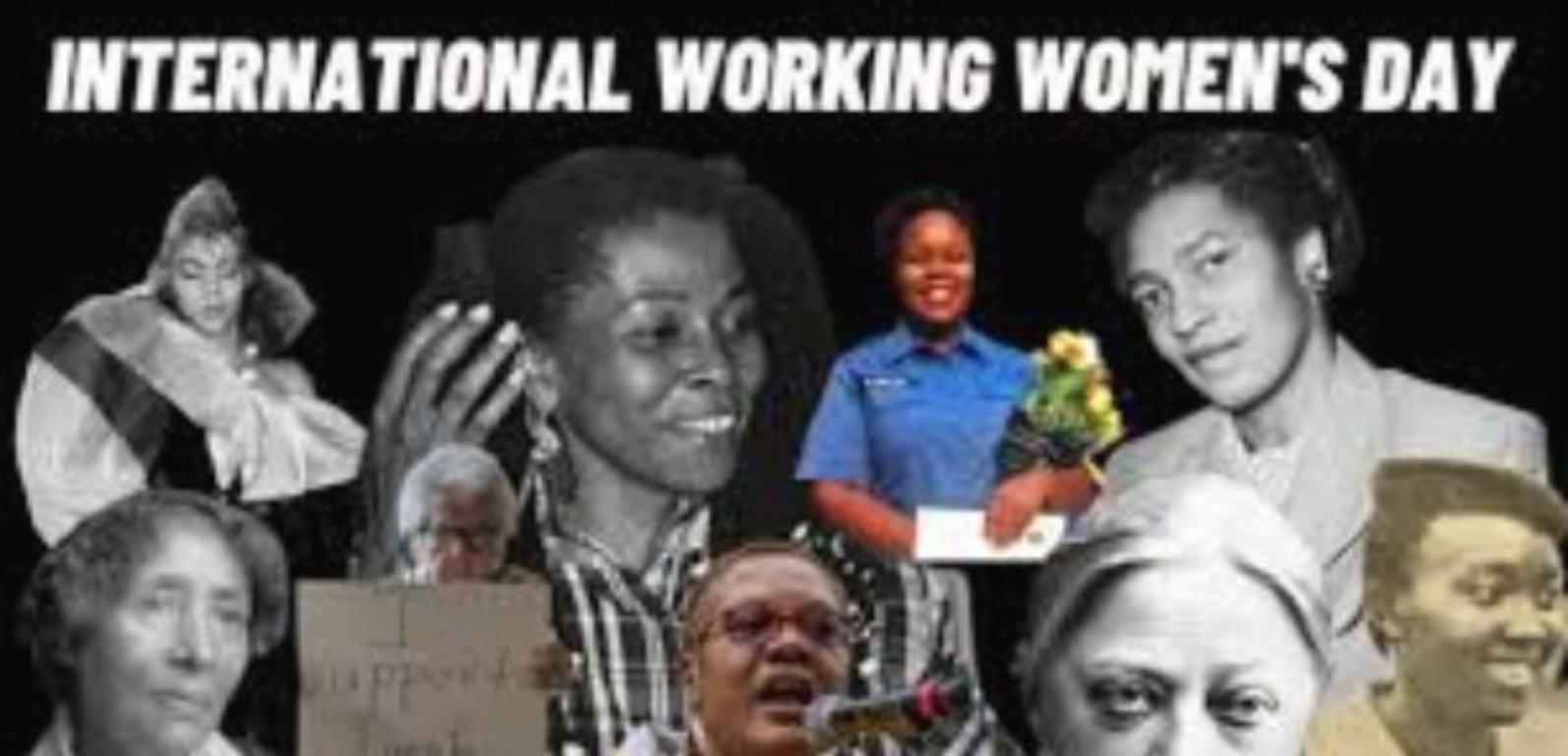
Once again the world marks International Women’s Day (IWD). The theme of this year’s IWD is “Give to Gain”. As the case has been now for decades in most quarters, the IWD and its theme are projected in liberal ways that help bury the revolutionary roots of the day from sight. We must however never forget that the day was born seven decades before the United Nations Organization recognised it as an international day, through struggle by socialist working-class women.
Today, International Women’s Day tends to be defined by an array of corporate platitudes, “pink-washed” marketing campaigns, and fine, but more often than not empty words by governments about women. But beneath the veneer of commercialized empowerment lies a radical, working-class history. The Day was not a benevolent gift to women by the United Nations, governments or employers.
It was forged in the fire of strikes, bread riots, and the relentless struggle of women who knew that their liberation was inseparable from the overthrow of a system that profits from their exploitation. For genuine change-seeking women, to celebrate the International Women’s Day is to remember the struggles and women behind these struggles that gave birth to this day as a day of solidarity against the commodification of women as workers and their being oppressed under the patriarchal regime of capitalism.
These struggles and included the waves of strikes by women in the textile and garment sector in New York, Lawrence and other parts of the United States which led to 28 February being adopted as National Women’s Day in the US in 1909. These women include the revolutionary women gathered with revolutionary men at the International Socialist Congress held in Denmark on 28 August to 3 September 1910 where they moved a motion for the first ever International Women’s Day to be organised by activists in Europe in March 1911. And definitely one of the most graphic demonstrations of the revolutionary place of working-class women is their role in Petrograd. Women’s demonstration for “Bread and Peace” in that city as they marked the International Women’s Day served as the spark for the Russian Revolution.
We must never forget, not for one moment, that, at the heart of the emergence of the Day as the International Working Women’s Day is resistance and an unshaken commitment to the liberation of women from patriarchy and capitalism.
The Double Burden of Capitalism and Women’s Resistance
For the working-class woman, oppression is not merely a matter of “glass ceilings” or a lack of representation in boardrooms. It is a material reality baked into the structure of capitalism. While liberal feminism often focuses on helping a few women reach the top of the existing hierarchy, socialist feminism challenge the system in which this hierarchy is rooted, fighting to smash it and build a liberatory world.
Working-class women are often concentrated in low-wage sectors like healthcare, education, and service—industries that are chronically undervalued precisely because they are feminized. Meanwhile, even the leadership of trade unions in these feminsed sectors of work and the economy are men!
Alongside its exploitation of the working woman’s labour, capitalism relies on a massive amount of unpaid labour from women. These include such activities as cooking, cleaning, and caregiving. Women tend to be the ones that do these at home, even if they still have to go to the factory, the office or the shop. This is unpaid work which subsidises what the capitalists should be paying as wages. It is also the nerve centre of social reproduction which keeps the current workforce alive and prepares the next generation of workers, all at zero cost to the employer.
Solidarity, struggle and social transformation
True liberation cannot be achieved through individual advancement or the “leaning in” of the elite. When a female CEO oversees the exploitation of thousands of women in the Global South, that is not feminist progress—it is the globalisation of patriarchy.
A working-class commemoration of International Women’s Day must be based on struggle which must include the following:
Universal Social Services: The fight for socialised childcare, healthcare, and eldercare to lift the weight of unpaid domestic labour off the individual family unit, and consequently women who bear this in most instances.
Sexual and Reproductive Health and Rights (SRHR): Reproductive and preventative health must be treated as a right, not a commodity. The right of a woman to her body must be fully respected. Abortion must be decriminalised. Feminists, working-class activists and the civil society movement must insist that being a signatory to the Maputo Protocol, Nigeria must respect the provisions of Article 14 of the Protocol which establishes the health and reproductive rights of women in Africa as steps that governments are legally bound to uphold.
Workers’ Power: The most effective tool for women’s rights remains workers’ power. This includes being trade union organising and revolutionary activism in socialist organisations, which are part of the labour movement. We must insist that our trade unions include women’s issues, in collective bargaining demands and fight to wipe out the gender pay gap and stop workplace harassment.
Internationalism: Our feminism must be anti-imperialist and anti-capitalist. We stand in solidarity with other women across the world, especially across Africa and other part of the Global South who bear the brunt of climate change, debt colonisation, and the violence of war.
Down with patriarchy! Down with capitalism! The struggle for women’s liberation is the struggle for the emancipation of the entire working class. We don’t just want a seat at the table; we want to build a world where no one goes hungry while the table is being set. We must thus give our resistance and revolutionary struggle to gain a better world where patriarchy and capitalism are in the rearview of human progress.
by Lola ADEBOLA