

Introduction
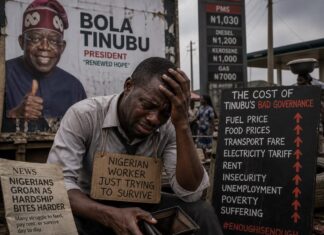
The Bola Tinubu-led APC government has made a sweeping overhaul of Nigeria’s tax laws, amid a deepening cost-of-living crisis. This is a peak of the neoliberal policies the administration has pushed through over the last three years. These include its removal of the petrol subsidy and repeated devaluations of the naira, which together had contributed significantly to rising inflation and shrinking real wages.
The newly signed Nigeria Tax Act, 2025, (NTA, 2025) is being presented together with additional regulations, as “relief” for low-income earners and small businesses. But a closer look reveals that the much-touted reliefs are largely cosmetic. The tax thresholds remain exceedingly low given inflation and collapsing purchasing power. The burden of living a horrendous life iremains heavily on the backs of working people. And the overarching policy remains one of austerity and revenue-extraction from the many to benefit the few.
In this article, we critically examine the law to reveal some of its key provisions in comparison with the previous tax framework. This analysis highlights the reality of the law’s failure to protect the poor. It shows how it rather worsens the plight of working-class people., Further, we will expose the connection of the Act to the broader neoliberal policy orientation of the regime, and the general lack of transparency and accountability in the government’s fiscal management.
Key provisions of the new tax law
President Tinubu signed the NTA 2025 into law on 26 June 2025 and it took effect from 1 January 2026. Some of its salient features are :
- Section 58 of the NTA sets the tax-exempt threshold for personal income tax at ₦800,000 per annum. This means the first ₦800,000 of income is tax free.
- The tax bands progresses as follows: the next ₦2,200,000 is taxed at 15%; the next ₦9,000,000 at 18%; the next ₦13,000,000 at 21%; the next ₦25,000,000 at 23%; and income above ₦50,000,000 at 25%.
- For companies, Section 56 defines a “small company” as one with a gross turnover of ₦100 million or less per annum and total fixed assets not exceeding ₦250 million. These small companies pay 0% tax under the Act. Large companies pay 30%, reducible to 25% by presidential order.
- The law repeals and consolidates many prior tax statutes (such as the Personal Income Tax Act, Companies Income Tax Act, etc.) into one unified code.
These changes are being promoted by the Minister of Finance, MR Wale Edun as representing a more “progressive” tax system which raises the exempt threshold, gives relief to small businesses and low earners, and modernises tax administration.
Comparison with the previous tax regime
Under the previous regime, for instance under the Personal Income Tax Act, 2004 and related regulations, low-income earners began paying tax at much lower thresholds. The previous rates were:
- First ₦300,000 – 7%
- Next ₦300,000 – 11%
- Next ₦500,000 – 15%
- Next ₦500,000 – 19%
- Next ₦1.6 million – 21%
- Above ₦3.2 million – 24%
Thus, previously, someone earning ₦300,000 per year would already pay tax at 7%. Under the new law, someone earning up to ₦800,000 per year falls into the 0% band. This appears to be a significant improvement on the surface.
For small businesses and the corporate income tax they pay, the new law expands the definition of “small company” (to ₦100 million turnover) and maintains a 0% tax for them. In the older regime, companies with low profits or turnover might still face a minimum tax, so this change appears more favourable for small enterprises, as part of the regime’s aim of increasing capital accumulation, even at that level.
Officially, the narrative is that low-income earners receive relief, small businesses are supported, large firms pay their fair share, and the tax system is modernised.
Why the “relief” is largely illusory for the working poor
Despite government rhetoric, a deeper analysis reveals that the reliefs are significantly weaker than they appear and may, in fact, worsen the burdens on poor working people. The tax-exempt threshold of ₦800,000 may seem generous, but two key factors undermine its effectiveness:
- Persistent high inflation in Nigeria means that ₦800,000 buys much less in real terms than before. Without inflation-adjusted thresholds, the nominal figure’s value is continually eroded. Inflation-adjusted data put the ₦300,000 value from 2004 to between ₦2,000,000 – ₦2,500,000 in 2025.
- The removal of key subsidies and devaluation of the naira have drastically increased living costs, further reducing real wages and incomes for working people. As a result, individuals earning below ₦800,000 would still face significant hardship despite not being directly taxed.
Therefore, using a nominal exemption threshold fails to account for the rapid erosion of purchasing power, making the “relief” largely cosmetic. In real terms, those under the threshold will still struggle to make ends meet.
The “relief” ignores real income distribution and the informal economy
Nigeria’s large informal sector comprises many workers with incomes below formal tax thresholds who face rising living costs and de facto tax burdens through inflation, indirect taxes, VAT, impact of the loss of subsidies, and informal levies by several local – at times shadowy – authorities. The new law focuses on formal income tax allowances but neglects the majority of the working poor, who are not in the formal PAYE system, but who suffer as much , if not more, from price hikes, a devalued currency, and higher costs for utilities and transport. As such, the tax “relief” is largely irrelevant to the millions of working-class people outside these brackets who suffer from the neoliberal-capitalist economic policies of the Tinubu-led APC regime.
The broader context: subsidy removal, naira devaluation, and austerity
This tax reform must be understood within the wider economic context. The Tinubu administration has removed fuel and electricity subsidies, floated the naira, and implemented policies that have contributed to spiralling inflation. These actions have increased the cost of living for working-class people. The new tax regime, presented as relief, merely attempts (and fails) to catch up with inflation and rising living costs, shifting the burden of the state’s revenue generation onto everyday working-class people rather than through a tax system that promotes wealth redistribution.
Thresholds very low in real terms
At an ₦800,000 tax-exempt annual income, this equates to roughly ₦66,667 per month. In cities like Lagos and Abuja (and many others), considering the costs of housing, transport, food, and utilities, this still places many workers in precarious situations. Therefore, the exemption does not provide meaningful relief to workers, most of whom are living hand-to-mouth. Additionally, those earning just above the threshold become liable for a 15% tax on the next ₦2.2 million, which, in an inflationary economy, captures many who are still vulnerable.
Erosion of real benefits over time
Because the thresholds and tax bands are set in nominal naira amounts without automatic inflation adjustments, their real value diminishes year by year. This means more workers will gradually be drawn into tax liability, and their effective net income after tax will reduce or stagnate as cost-of-living increases.
Corporate tax reliefs favour big business
While personal tax changes focus on low and middle incomes, corporate tax changes tend to favour corporations. The elimination of some tax burdens for “small” companies, allowances for large multinationals with the low 15% ETR applying to multinationals and large firms indicate big concessions for the capitalist class. The burden of revenue-raising is shifting more towards consumption (via indirect taxes), informal businesses, and ordinary workers, rather than targeting elite wealth or corporate rents.
Lack of accountability and transparency
The Tinubu administration has repeatedly failed or refused to publish both statutory and other fiscal performance documents in timely manner. Furthermore, there was a controversy surrounding its gazetting of what many have described as a doctored version of the Nigerian Tax Administration Act (NTAA), with some divergence from the text passed by the National Assembly. This underscored the extent to which sections of the ruling class are willing to disregard constitutional procedures when it serves their interests. The government failed to conduct a thorough investigation to inform the public about where the NTA was tampered with in the chain of handling. Instead, the presidency just bulldozed everyone into accepting what the executive claimed to be the text as divine truth, without further investigation.
That episode in the process of the Act coming into force reflects the regime’s lack of concern about transparency.We see a similar spirit in the lack of timely reports, broken portals, and opaque procurement processes that go with it. These all suggest that the state is not interested in being accountable to the people. It is accountable only to the class it represents, and even at that mainly to the section of that class which is at the helm of affairs. As a result, the tax reform is being implemented in a context where working-class people in Nigeria cannot meaningfully track how any additional revenue will be used, undermining claims that the regime’s objective is “fair” or “relief oriented” for the working masses.
We must not be fooled by their propaganda
Working-class people should not accept the official narrative that the tax reform is a benevolent improvement. We must recognise it as an extraction mechanism by a neoliberal-capitalist state. The new tax law is better understood as a mechanism for the Nigerian ruling class to stabilise revenue and shift costs onto labour and the consumption of working people, while maintaining advantages for business, elites, and global investors, rather than as a “pro-poor” reform.
Path forward for the working class
The working class must reject the government’s portrayal of the tax reform as providing relief. We have to recognize that it rather increases burdens for our class. The trade unions, pro-labour civil society organisations, and working-class communities need to raise awareness of its impact on real incomes amid inflation and subsidy removal.
We need to demand transparency and accountability which should include the publication of fiscal and procurement data. We must also clearly advocate for genuinely progressive tax reforms that make the rich and corporations pay, and stronger social protection measures for working people.
The linkages between the austerity measures of the regime and this tax reform must be exposed. Fuel subsidy removal, currency devaluation, inflation, and the current neoliberal tax reform are all parts and parcel of the attacks of the capitalist class against our class. And we must formulate and promote an alternative anti-capitalist economic model rooted in liberatory working-class struggle.
by Emmanuel EDOMWONYI